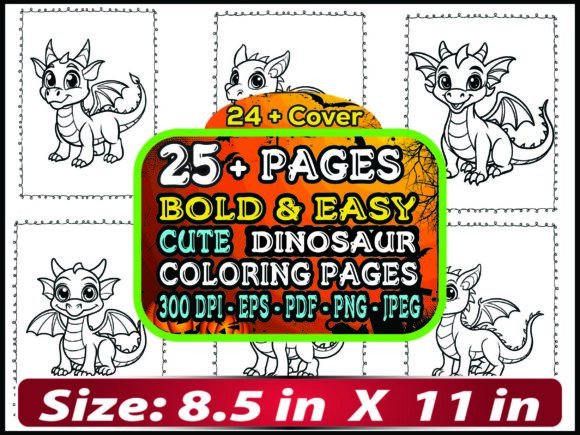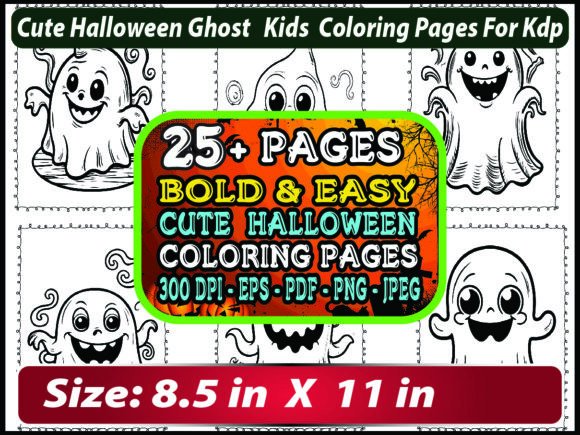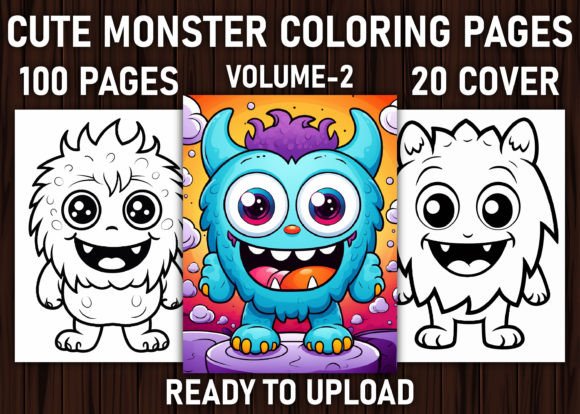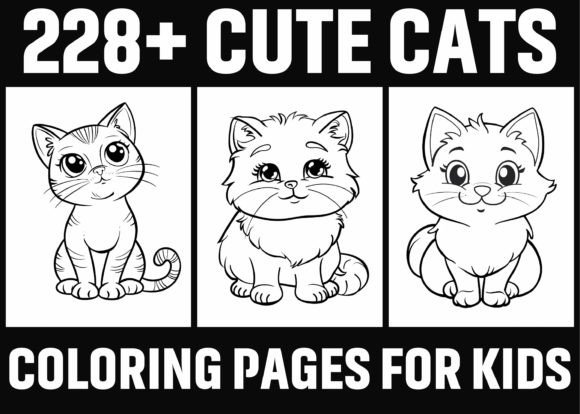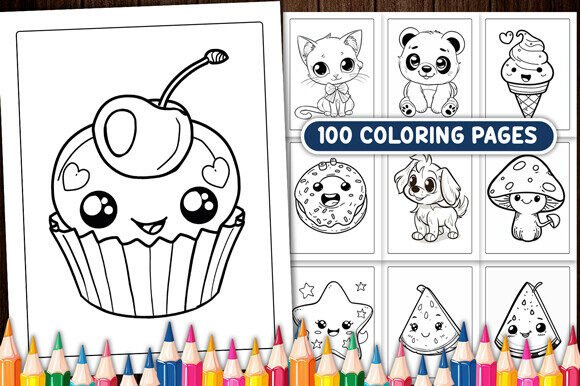
Kawaii Coloring Book Pages for Kids
For creators building low-content books on Amazon KDP—or educators, therapists, and small business owners designing engaging print resources—Kawaii Coloring Book Pages for Kids is more than a design pack. It’s a strategic asset: a ready-to-deploy interior system built for clarity, consistency, and conversion. When your goal is to launch a high-quality coloring book quickly—without compromising on child appeal, print fidelity, or platform compliance—the value isn’t in the cuteness alone. It’s in how thoughtfully each page supports your broader objectives: faster time-to-market, stronger brand recognition, smoother production workflows, and improved customer retention.
Why Strategic Alignment Matters More Than Aesthetic Appeal
A kawaii aesthetic resonates with children because it signals safety, playfulness, and emotional accessibility—rounded shapes, soft expressions, gentle lines. But for creators, that same visual language serves functional goals. Kawaii Coloring Book Pages for Kids delivers 105 original black-and-white illustrations at 300 DPI, sized precisely to 8.5″ × 11″. That dimension isn’t arbitrary: it fits standard US printing, reduces trimming errors, and accommodates small hands without overwhelming fine motor development. Each file is pre-formatted for KDP’s requirements—no bleed needed, no margin guesswork, no last-minute scaling corrections. That means fewer rejections, faster approvals, and less time troubleshooting technicalities.
More importantly, consistency across pages builds trust—not just with buyers, but with algorithms. Amazon’s search and recommendation systems reward titles with strong internal coherence: uniform resolution, predictable layout, and thematic continuity. Randomly assembled clipart or inconsistent line weights erode perceived quality, even if individual images look fine. Kawaii Coloring Book Pages for Kids avoids that risk by offering a unified visual voice—every page shares the same stylistic grammar, line weight discipline, and compositional rhythm. That cohesion translates directly into higher average session duration on your KDP detail page and better repeat purchase likelihood.
When to Use These Pages—and When to Pause
Use this interior pack when your priority is launching a viable, compliant, and emotionally resonant product within 72 hours—not when you’re testing an unproven niche or building a long-term IP franchise. It works best as part of a deliberate sequence: first validate demand (e.g., check Best Sellers Rank trends for “kawaii coloring book for kids” over 90 days), then select a clear positioning hook (e.g., “with friendship themes,” “featuring inclusive characters,” or “designed for early elementary fine motor practice”), and only then deploy these pages as your production backbone.
Don’t use Kawaii Coloring Book Pages for Kids as a shortcut to avoid market research. If your target audience skews toward older children (ages 8–12), or if you’re aiming for therapeutic use (e.g., anxiety reduction or sensory regulation), the playful simplicity of kawaii may misalign with developmental needs. Similarly, if your brand voice leans toward educational rigor—think STEM integration or multilingual labeling—these pages serve as a foundation, not a finish. You’ll need to layer intentional context: adding guided prompts, vocabulary boxes, or reflection questions alongside the art.
Practical Integration: Beyond Drag-and-Drop
Receiving a .zip with PDF, PNG, and JPG files gives flexibility—but only if you know how to leverage each format intentionally:
- PDF files are your primary KDP upload path. They preserve vector-like crispness at scale and embed fonts correctly. Always verify margins using KDP’s online previewer before publishing.
- PNGs let you insert single pages into custom layouts—ideal for creating themed section dividers, cover mockups, or social media teasers. Their transparency support allows clean overlays on branded backgrounds.
- JPGs work well for email newsletters or blog posts where file size matters, but avoid them for final print output—they compress lossily and can blur fine lines.
Also consider sequencing. Children engage more deeply when pages follow a subtle narrative arc: start simple (single objects like cupcakes or clouds), progress to grouped elements (a picnic scene with three animals), then introduce gentle complexity (a classroom with labeled supplies). The 105-page count lets you build that progression naturally—no need to force filler. Group pages by theme during assembly: food, animals, emotions, seasons. That structure supports both usability and discoverability—parents searching “kawaii coloring book for kids animals” will find your title more relevant if animal-themed pages dominate the first third.
Risk Mitigation: What Happens Without Intentional Use?
Using Kawaii Coloring Book Pages for Kids without clarifying your objective invites three common pitfalls:
- Commoditization: If your book differs only in cover design from dozens of others using similar interiors, price becomes the sole differentiator—eroding margins and inviting race-to-the-bottom competition.
- Brand dilution: Releasing multiple titles with identical interiors under one imprint weakens perceived expertise. Readers won’t associate your name with a distinct point of view—just speed and volume.
- Operational friction: Assuming all 105 pages must be used creates bloat. A 60-page book with tight curation often outsells a 105-page version with uneven pacing or repetitive motifs.
Mitigate these by treating the pack as raw material—not a finished product. Audit each page against your stated goal: Does it reinforce your positioning? Does it serve a developmental or emotional need you’ve identified? Does it align with your cover’s promise? Remove or reorder freely. KDP allows interior edits post-launch; your first version should reflect intention, not obligation.
Long-Term Value: From One-Off Title to Sustainable System
The highest ROI from Kawaii Coloring Book Pages for Kids emerges not from single-title launches, but from repeatable systems. Once you’ve validated a theme—say, “kawaii feelings & emotions”—you can extend that concept across formats: a companion journal with matching line art, flashcards sized for small hands, or printable activity packs for teachers. Because all assets share the same visual DNA, cross-promotion feels natural, not forced.
That consistency also accelerates learning for your audience. Children recognize recurring characters or motifs across products, reinforcing familiarity and confidence. For educators, it means lesson plans scale seamlessly—from coloring time to discussion prompts to role-play scenarios—all anchored in the same visual language.
Finally, consider attribution and evolution. While these files are licensed for KDP and personal use, documenting your adaptations—how you sequenced pages, what prompts you added, which themes you emphasized—builds internal knowledge. That insight informs future product decisions far more reliably than chasing algorithm shifts or trend reports.
Ultimately, Kawaii Coloring Book Pages for Kids succeeds not because it’s “cute” or “ready-made,” but because it removes executional friction—so you can invest energy where it counts: understanding your audience, refining your message, and building offerings that endure beyond the next bestseller list.