Mandala Coloring Pages for Adults: A Practical Guide for Creators and Publishers
Mandala Coloring Pages for Adults are intricate, symmetrical designs rooted in spiritual and meditative traditions—yet adapted for contemporary creative use. Unlike generic geometric or floral coloring sheets, mandalas follow radial balance, concentric layers, and intentional repetition, encouraging focus, relaxation, and visual rhythm. What sets a high-quality Mandala Coloring Pages for Adults collection apart isn’t just aesthetics—it’s intentionality in structure, scalability, and adaptability for commercial publishing.
Why Hand-Drawn Mandalas Matter for Professional Use
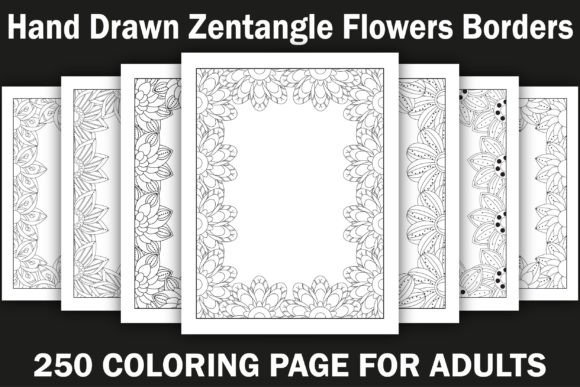
Many digital mandala collections rely on algorithmic generation or traced vector templates, resulting in predictable patterns or subtle inconsistencies at scale. In contrast, hand-drawn mandalas carry organic variation—subtle line weight shifts, intentional asymmetry within symmetry, and nuanced spacing that invites sustained engagement. For creators building KDP interiors or print-on-demand (POD) products, this authenticity translates directly to perceived value. Readers notice the difference between a “designed” page and one that feels personally crafted—even if they can’t articulate why.
Hand-drawn also implies human oversight at every stage: composition, negative space management, and contour clarity. These details become critical when scaling to 8.5″ x 11″ at 300 DPI. A poorly constructed mandala may appear muddy or lose definition in print; a thoughtfully drawn one retains crispness across formats—whether printed on matte paper, used as a book cover background, or adapted into a textile pattern.
File Formats and Their Real-World Implications
This bundle delivers three essential file types—JPG, PNG, and EPS—each serving distinct production needs:
- JPG files are universally compatible, lightweight, and ideal for quick interior layout in KDP or IngramSpark. They’re best for final output where editing isn’t required.
- PNG files preserve transparent backgrounds, making them flexible for layered design work—think adding textures, overlays, or integrating mandalas into themed spreads without white borders.
- EPS files are vector-based and fully editable in Adobe Illustrator or Affinity Designer. This means you can resize without quality loss, adjust line thickness, recolor individual elements, or extract motifs for logos, social media graphics, or companion products like journals or planners.
Not all mandala bundles offer editable vectors—or if they do, they’re often low-resolution or lack clean paths. Having 100 EPS files at 300 DPI ensures professional-grade flexibility without needing to redraw or trace from raster images—a significant time and quality advantage for publishers managing multiple titles.
Print Readiness: Beyond Resolution Claims
Resolution alone doesn’t guarantee print success. Many listings advertise “300 DPI” but deliver files with insufficient bleed, inconsistent margins, or embedded compression artifacts. This bundle is built around actual production constraints: each page is sized precisely to 8.5″ x 11″ (US Letter), with balanced margins and no unintended cropping. That means less manual adjustment before upload—and fewer customer complaints about cut-off details.
It’s also worth noting that A4 (210 × 297 mm) and US Letter aren’t identical. While many international POD services accept Letter-sized interiors, others default to A4. This bundle avoids ambiguity by specifying dimensions clearly—and because the files are vector-based (EPS), resizing to A4 without distortion is straightforward. Still, creators targeting non-US markets should verify platform requirements before finalizing layouts.
How This Compares to Alternative Approaches
Some creators opt to build mandala books using free SVG resources or public-domain illustrations. While cost-effective, these often lack cohesive style continuity—pages may vary in line weight, density, or complexity, leading to an uneven reader experience. Others commission custom illustrations, which offers uniqueness but carries higher upfront cost and longer turnaround times.
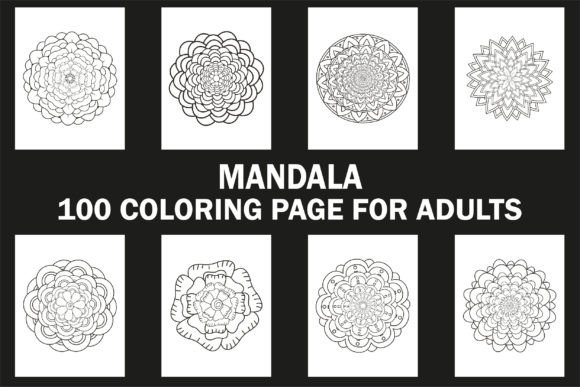
A curated, hand-drawn bundle like this sits between those extremes: it provides stylistic consistency across all 100 pages, eliminates licensing uncertainty, and supports rapid iteration. You’re not buying isolated images—you’re acquiring a unified visual system ready for branding, series development, or thematic expansion (e.g., seasonal mandalas, mindfulness prompts, or nature-inspired variations).
That said, it’s not a universal solution. If your project requires highly specific symbolism—such as Tibetan Buddhist iconography, chakra-aligned elements, or culturally contextual motifs—this general-purpose set may need supplementation. Likewise, educators or therapists seeking clinical-grade stress-reduction tools might prioritize research-backed complexity levels over artistic variety.
Use Cases Where Mandala Coloring Pages for Adults Deliver Clear Value
This collection excels in several practical scenarios:
- KDP Interior Development: With 100 unique, print-ready pages, you can launch a standard 104–120-page adult coloring book quickly—adding title, intro, and credits without sourcing or formatting each image individually.
- Multi-Product Expansion: The EPS files allow repurposing: extract a central motif for a matching journal cover, convert border elements into divider pages, or isolate sections for printable cards or stickers.
- Niche Branding: Because all designs share a consistent hand-drawn aesthetic, they support recognizable branding across titles—valuable if you plan to publish sequels, themed volumes (e.g., “Ocean Mandalas,” “Forest Mandalas”), or companion workbooks.
- Hybrid Publishing Models: Pair the coloring pages with original content—guided reflections, short essays on symmetry and focus, or breathing exercise prompts—to differentiate your offering beyond standalone line art.
Limitations to Acknowledge Honestly
No single resource fits every need. This bundle contains no text, no copyright-free commentary, and no pre-written marketing copy—so creators still need to develop supporting material for their books. It also doesn’t include alternate versions (e.g., simplified outlines for beginners or advanced variants with micro-detail). If your audience skews toward absolute beginners or experienced artists exclusively, you may want to supplement with targeted additions.
Additionally, while the designs are tested for print clarity, extremely fine linework may challenge lower-end home printers or certain POD providers’ toner calibration. Testing a few sample pages with your intended printer—especially on the paper stock you plan to use—is always advisable.
Making the Right Choice for Your Goals
Choosing Mandala Coloring Pages for Adults comes down to alignment with your workflow, audience expectations, and long-term publishing strategy. If you value consistency, editability, and production efficiency—and you’re building for Amazon KDP or similar platforms—this type of hand-drawn, multi-format bundle reduces friction without sacrificing quality.
But if your priority is ultra-niche subject matter, integrated educational content, or experimental formats (like augmented reality coloring or interactive PDFs), you’ll likely need to combine this resource with other tools or custom development.
Ultimately, the strongest Mandala Coloring Pages for Adults collections serve as reliable foundations—not finished products. They give creators room to add voice, context, and purpose. When evaluated alongside alternatives, what stands out here isn’t just quantity or resolution, but the combination of human craftsmanship, technical readiness, and format versatility—all calibrated for real-world publishing demands.