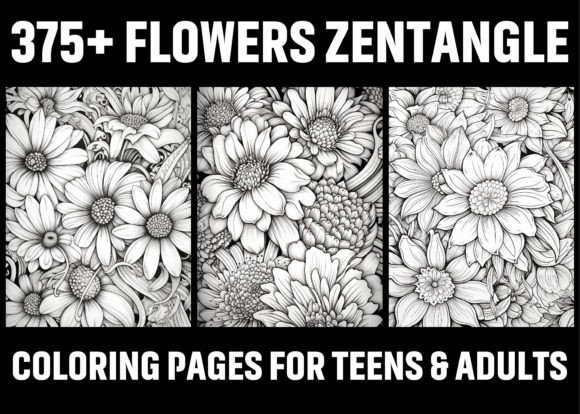
375 Flowers Zentangle Coloring Pages: A Deep Dive Into Creative Utility, Accessibility, and Cross-Functional Value
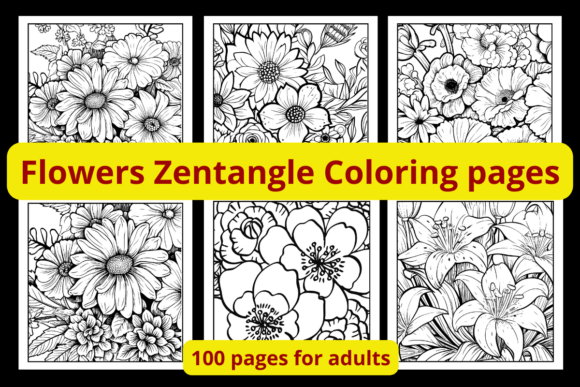
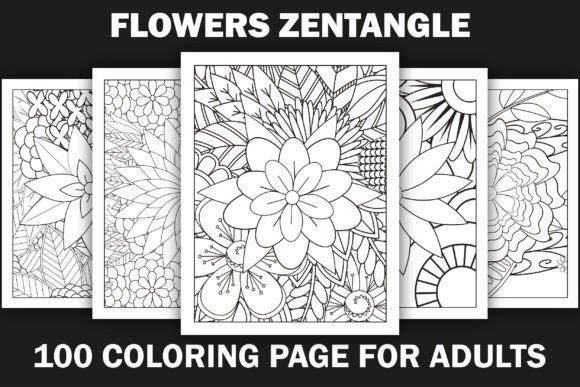
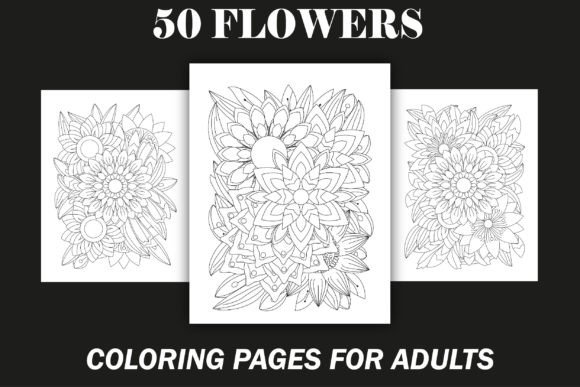
Within the expanding ecosystem of digital creative tools, 375 Flowers Zentangle Coloring Pages stands out—not as a novelty item, but as a rigorously structured, production-ready resource with layered utility across diverse domains. Its 375-page interior, paired with 107 customizable book cover options, is delivered as a high-fidelity ZIP archive containing both JPG and PNG files at 300 DPI—designed for A4 (8.5″ × 11″) print compatibility and scalable digital adaptation. This isn’t merely a coloring book; it’s a modular design asset engineered for flexibility, fidelity, and real-world implementation.
Design Integrity Meets Practical Production Standards
Every page in the 375 Flowers Zentangle Coloring Pages collection adheres to foundational principles of visual clarity and functional reproducibility. The black-and-white line art avoids grayscale fills or anti-aliased edges, ensuring crisp output whether printed on standard office paper or rendered on tablet displays. At 300 DPI, each image retains structural integrity even when enlarged beyond native A4 dimensions—a critical advantage for educators preparing large-format classroom visuals or designers integrating motifs into textile or packaging mockups.
The dual-format delivery—JPG and PNG—serves distinct technical needs. JPG files offer lightweight, universally compatible previews ideal for rapid browsing or bulk upload to print-on-demand platforms like Amazon KDP. PNG files preserve transparency layers, enabling seamless compositing in graphic design workflows: overlaying floral Zentangle elements onto custom backgrounds, layering them within branding assets, or extracting individual petals or vines for icon libraries. This intentional format redundancy reflects an understanding of how professionals actually work—not just how coloring books are traditionally consumed.
Adaptability Across User Contexts
While marketed toward teens and adults seeking mindful engagement, the 375 Flowers Zentangle Coloring Pages bundle demonstrates exceptional cross-role applicability. Its value shifts meaningfully depending on who opens the ZIP file—and why.
- Educators use individual pages as tactile scaffolds for teaching pattern recognition, symmetry analysis, and botanical form study—particularly in art integration units or STEAM-aligned curricula. A single page featuring concentric petal arrangements can anchor lessons on radial symmetry; another with interlocking vine structures supports discussions about tessellation and organic geometry.
- Mental health practitioners incorporate select designs into clinical toolkits—not as prescriptive “art therapy worksheets,” but as nonverbal regulatory tools. The predictable repetition in Zentangle-inspired florals offers grounding without narrative demand, making them suitable for clients experiencing anxiety, ADHD-related restlessness, or post-traumatic hypervigilance. Unlike illustrative scenes that may trigger associative memory, these abstracted botanical forms operate at a neutral cognitive register.
- Independent publishers and KDP entrepreneurs treat the bundle as a production backbone. With 107 premium cover PNGs included—each at 300 DPI and designed for resizing—the path from download to published title is dramatically shortened. No external cover designer needed; no licensing ambiguity around floral motifs. Users report launching multiple niche titles within 72 hours: Botanical Calm: A Zentangle Flower Journal for Nurses, Floral Focus: Concentration-Building Pages for Remote Workers, Rooted Patterns: Nature-Inspired Mindfulness for Teens. Each leverages the same interior asset pool but targets distinct audience pain points through title, subtitle, and cover customization.
- Graphic designers and branding specialists mine the collection for vector-adjacent assets. Though delivered as raster images, the clean linework and consistent stroke weight allow reliable auto-tracing in Illustrator or Affinity Designer. Extracted elements—single leaves, stamen clusters, or border motifs—become reusable components in brand systems requiring organic yet structured visual language.
Workflow Integration Beyond Coloring
The practical strength of 375 Flowers Zentangle Coloring Pages lies in how easily it integrates into existing digital and physical pipelines—without requiring new software, subscriptions, or technical upskilling.
For users managing content calendars, the ZIP structure enables batch processing: renaming conventions follow logical sequences (e.g., flower_001.jpg through flower_375.jpg), allowing drag-and-drop import into Canva, Adobe Express, or InDesign templates. Educators building weekly PDF handouts can merge selected pages with instructional text using free tools like PDFsam Basic—no paid PDF suite required. Designers prepping social media carousels extract 3–5 complementary pages, adjust contrast for screen legibility, and export as optimized webP—retaining detail while minimizing load time.
Even physical prototyping benefits. Because all interiors are A4-sized and DPI-optimized, test prints on matte photo paper reveal true line density and spacing before committing to full print runs. One small press reported using the first 50 pages to calibrate their risograph machine’s ink saturation—discovering that slight adjustments to contrast in the PNG files yielded superior registration for multi-layer floral compositions.
Considerations for Ethical and Sustainable Use
While the license permits commercial resale—including on Amazon KDP—the responsible deployment of 375 Flowers Zentangle Coloring Pages warrants attention to context and attribution norms. Unlike generative AI outputs, this collection represents deliberate human design labor. Though no individual artist attribution is provided in metadata, its stylistic cohesion suggests curated authorship—making thoughtful positioning essential.
For example, labeling a derivative journal as “hand-drawn by [Your Name]” would misrepresent provenance. Accurate framing—such as “Curated floral Zentangle patterns adapted for mindful coloring” or “Digitally optimized botanical line art for creative expression”—honors both the source material and end-user expectations. Similarly, educators distributing pages digitally should clarify usage rights to students: these are licensed for personal and classroom instruction, not redistribution or public posting without permission.
From a sustainability perspective, the digital-first model eliminates physical waste during exploration. Users can sample 20 pages before printing any—reducing paper consumption significantly compared to purchasing multiple physical coloring books to find a preferred style. And because the files remain editable, a single download serves evolving needs over time: the same floral motif used for stress reduction today might become part of a wedding invitation suite next year, resized and recolored in Procreate.
Why Resolution and Format Fidelity Matter More Than Quantity
It’s tempting to focus on the number “375”—and indeed, volume enables variety—but the operational value emerges from consistency of execution. Low-resolution coloring pages often suffer from jagged edges, inconsistent line weights, or unintended gaps in closed shapes—frustrating for colorists using fine-tip pens or markers. In contrast, every image in this bundle maintains uniform 1.5-pt stroke weight, fully enclosed contours, and balanced negative space—enabling confident coloring without constant erasing or correction.
This fidelity also future-proofs usage. As display technologies evolve—higher-DPI tablets, foldable screens, VR sketch environments—the 300 DPI source ensures adaptability. A design team preparing assets for an immersive botanical meditation app imported the PNGs directly into Unity, using them as base textures for procedurally animated petals. The resolution held; the clean edges translated cleanly to shader-based rendering.
Real-World Observations From Early Adopters
Field notes from varied users reveal nuanced patterns of adoption:
- A university counseling center printed 30 pages on recycled paper, bound them into small spiral notebooks, and distributed them during midterms—reporting a 40% increase in student utilization of quiet study spaces.
- An occupational therapist working with autistic adolescents introduced the pages as “pattern matching challenges”: identifying repeated motifs across different flowers before coloring, strengthening visual discrimination skills alongside motor control.
- A freelance logo designer used three extracted vine elements to construct a custom monogram for a local apothecary—blending botanical precision with Zentangle rhythm to evoke both science and serenity.
- A homeschooling parent created a “botany + art” unit where children colored pages while researching the real-world plants those designs abstracted—turning flower_187.jpg into a lesson on hibiscus pollination mechanics.
These applications share a common thread: they treat the 375 Flowers Zentangle Coloring Pages not as passive entertainment, but as a responsive medium—one that gains meaning through intentional interaction, contextual framing, and iterative reuse. Its power resides less in what it is, and more in how reliably it supports what users need to do next.